
Central Florida Based • Statewide Commercial Service
Commercial Asphalt Sealcoating & Repair.
Surface preparation, crack filling, sealcoating and pothole repair coordinated around the condition of your pavement and the way your property operates.
Pavement Preservation With a Plan
Protect Serviceable Asphalt. Repair Weak Areas First.
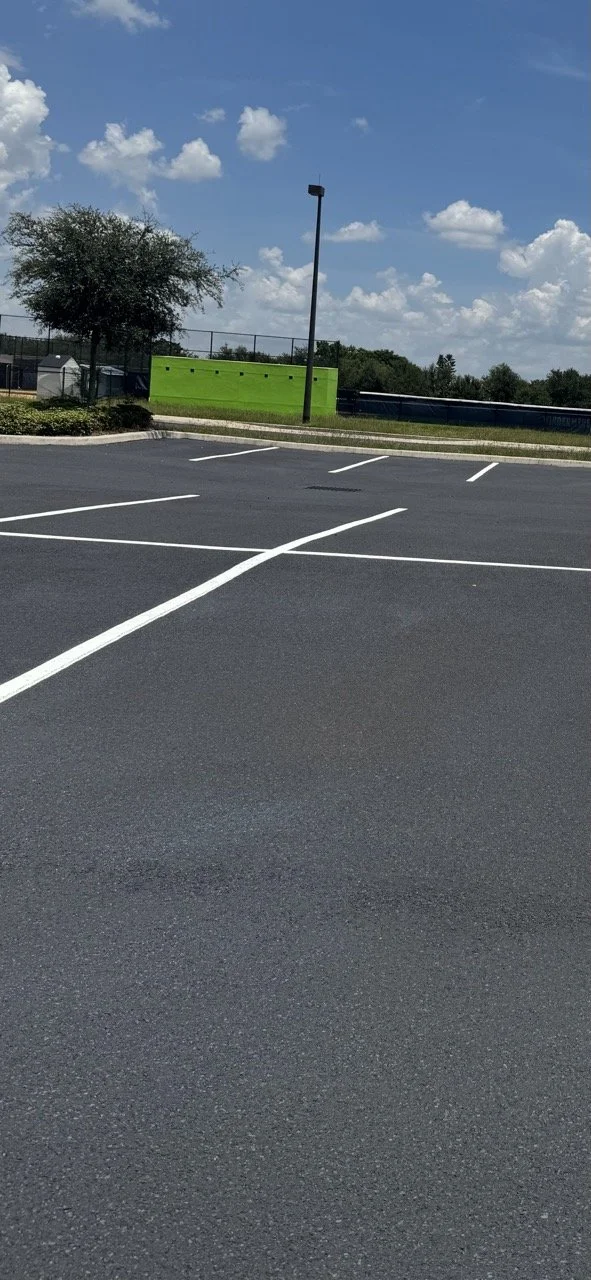
Asphalt sealcoating creates a more uniform appearance while helping protect a serviceable pavement surface from weather, sunlight and everyday exposure. The result depends on what happens before the coating is applied.
We build the scope around the actual lot—cleaning the surface, identifying cracks and failed areas, coordinating repairs and planning access before application begins.
Commercial Asphalt Capabilities
Sealcoating, Repairs & Surface Preparation.
Choose a focused repair scope or combine preparation, repairs, sealcoating and final pavement markings under one coordinated proposal.
Surface Protection
Asphalt Sealcoating
Apply a protective surface coating to suitable asphalt after the lot has been cleaned, prepared and approved repair work is complete.
- Commercial parking areas
- Drive lanes and access roads
- Single-site and multi-property scopes
Water Intrusion Defense
Crack Filling
Clean and fill qualifying pavement cracks before sealcoating or as a targeted maintenance service.
- Visible crack treatment
- Pre-sealcoating preparation
- Site-specific material selection
Localized Repair
Pothole Repair
Repair isolated pavement failures to improve the driving surface and prepare appropriate areas for the surrounding maintenance scope.
- Potholes and localized failures
- Repair-area preparation
- Commercial access coordination
Preparation
Cleaning & Surface Prep
Remove loose debris and prepare the pavement so the selected coating can be applied to a cleaner, more consistent surface.
- Sweeping and debris removal
- Problem-area identification
- Application-zone preparation
Scope Coordination
Repair Planning
Separate cosmetic wear from repair needs so failed pavement is not simply hidden beneath a surface coating.
- Condition-based recommendations
- Repair-priority planning
- Clear scope and exclusions
Finish Coordination
Restriping After Sealcoating
Coordinate the return of parking stalls, traffic markings and specialty pavement markings after the surface is ready.
- Existing-layout restriping
- New or modified layouts
- ADA and traffic-control markings
The Right Treatment for the Pavement
Know What to Protect. Know What to Repair.
A dark coating can improve appearance, but it cannot correct base failure, drainage problems or severely deteriorated asphalt. Those conditions should be identified before the project is priced.
Discuss the Pavement ConditionA Connected Project Scope
A Clear Path From Assessment to Reopened Parking.
Each stage affects the next. The proposal should account for surface condition, preparation, repairs, application conditions, cure time and the markings that return after coating.
Review
Evaluate the Lot
Confirm approximate area, pavement condition, traffic and access constraints.Prepare
Clean & Isolate
Remove loose material, define work zones and prepare areas included in the scope.Repair
Treat Priority Areas
Complete approved crack filling and localized repairs before the surface coating.Protect
Apply Sealcoat
Apply the selected material during suitable pavement and weather conditions.Reopen
Stripe & Restore Access
Return approved markings and reopen completed areas after the required cure window.Planned Around Active Properties
Plan the Work. Keep Access Moving.
Sealcoating temporarily removes parking and drive areas from service. We plan work zones around tenants, deliveries, traffic, weather and realistic reopening requirements.
Plan a Commercial ProjectPhased Work Zones
Divide qualifying lots so part of the property can remain accessible.
Traffic Coordination
Plan vehicle relocation, delivery routes and temporary closures before mobilization.
Weather Windows
Account for rain, temperature, humidity and surface moisture before application.
Cure & Reopening Plan
Set access expectations around the product, site and application conditions.
Tenant Communication
Provide clear work-zone and timing information for property distribution.
Marking Coordination
Schedule restriping after the coating is ready for the next stage of work.
Commercial & Institutional Properties
Commercial Asphalt Services Across Florida.
Central Florida is home base. We mobilize throughout the state for qualifying commercial, institutional, multi-location and larger pavement projects.
Asphalt & Sealcoating Questions
Questions Before the Work Begins.
Final recommendations and reopening times depend on the pavement, repair scope, material, weather and property operations.
What does asphalt sealcoating do?
Sealcoating adds a protective surface layer and creates a darker, more uniform finish on suitable asphalt. It helps protect the surface, but it does not correct structural failure, poor drainage or base movement.
How often should a commercial lot be sealcoated?
There is no single schedule for every property. Pavement age, traffic, sunlight, drainage, previous products and current condition all affect timing. The lot should be evaluated before another coating is recommended.
Should cracks and potholes be repaired first?
Qualifying cracks and failed areas are generally addressed before sealcoating. The appropriate repair depends on the type and severity of the failure; a surface coating should not be used to conceal a structural problem.
How long must the parking lot remain closed?
Closure time depends on the product, number of applications, pavement, temperature, humidity, shade and other site conditions. The proposal and project schedule will set the anticipated access restrictions.
Can the work be completed in phases?
Many commercial parking lots can be divided into work zones so access is maintained elsewhere on the property. Lot geometry, traffic flow, deliveries and curing requirements determine the practical phasing plan.
When is the parking lot restriped?
Pavement markings are returned after the sealcoat has reached the condition required for striping. Existing layouts can often be restriped, while changed layouts require additional planning and field measurement.
What information helps you prepare a quote?
Send the property address, recent photographs, approximate paved area, known repair concerns, site plans when available and the preferred timeframe. A walkthrough may be required before final pricing.
Request an Asphalt Proposal
Send Us the Property. We’ll Build the Scope.
Include the address, photographs, known problem areas and desired timeframe. We’ll review the property details and recommend the right next step.